
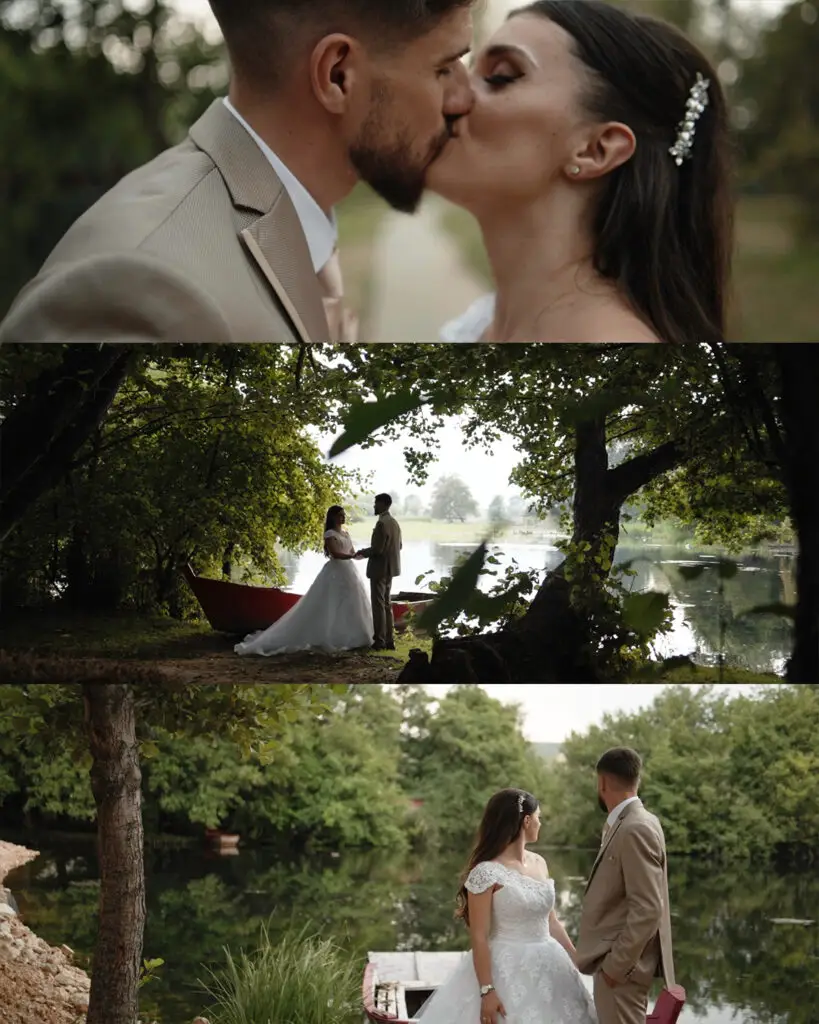
A wedding day moves quickly, but its emotional weight does not. The sound of a parent’s voice during a toast, the pause before you see each other, the way your guests fill the dance floor – these are the moments a great film brings back. So, how long should a wedding highlight film be? For most couples, the most meaningful answer is between five and eight minutes.
That range gives a filmmaker enough room to shape a real story, rather than a rapid montage of beautiful shots. It can hold the anticipation of the morning, the heart of the ceremony, the energy of the celebration, and the small, unplanned moments in between. Still, there is no single runtime that fits every wedding. The right length depends on the day itself and on what you want to feel when you press play years from now.
The Sweet Spot: Five to Eight Minutes
A five-to-eight-minute highlight film is often the ideal balance of emotion, pacing, and replay value. It is long enough to let meaningful words breathe. A few lines from your vows, a well-chosen toast, or a quiet exchange during a first look can become the emotional thread that carries the film forward.
It is also concise enough to remain watchable again and again. Your highlight film should be the piece you can share with family, revisit on an anniversary, and play when you want to return to the feeling of the day without setting aside an entire evening.
Within this length, a cinematic film can move naturally from one chapter to the next: getting ready, arriving at the ceremony, seeing each other, exchanging vows, celebrating with the people you love, and ending on a moment that feels true to you. The goal is not to fit every event into the film. It is to preserve the emotional shape of the day.
Why a Shorter Film Is Not Necessarily a Better Film
Three- to five-minute wedding highlights can be beautiful. They are often energetic, visually polished, and easy to share. For an intimate elopement, a courthouse ceremony, or a wedding with a simple timeline, a shorter film may be exactly right.
The trade-off is space. A shorter runtime usually means fewer spoken moments and less room for quiet. The film may lean more heavily on music, visuals, and a focused emotional arc. That can create a striking piece, but it may not fully hold the texture of a day filled with personal vows, emotional toasts, cultural traditions, or many people you want to remember.
A short highlight is strongest when it is intentionally brief, not when it is compressed to fit a predetermined number. A film should never feel rushed simply because it is trying to stay under a certain length.
When Three to Five Minutes Makes Sense
A shorter wedding highlight often works beautifully when the celebration is intimate, the ceremony is brief, or the couple wants a poetic, music-driven keepsake. It can also be a thoughtful choice if you are pairing it with a longer wedding film or full ceremony edit.
In that case, the highlight becomes a distilled emotional memory: not the full account of the day, but the feeling of it in its purest form.
When a Longer Highlight Film Is Worth It
Some weddings ask for more room. If your vows are deeply personal, your reception includes memorable speeches, or your day unfolds across several meaningful locations, an eight-to-12-minute highlight may serve the story better.
Longer does not automatically mean more emotional. It has to earn its runtime. Every scene should add something: a voice that matters, a reaction that reveals connection, a transition that lets the story settle. When editing is intentional, a longer film can feel immersive rather than slow.
This is especially true for celebrations with layered traditions. A multi-day wedding, a cultural ceremony, or a day with many important family moments may need a broader canvas. In these cases, limiting the highlight to five minutes can leave out the very details that make the wedding feel like yours.
The question is less about whether a longer film is “better” and more about whether it gives your story the space it deserves.
How Long Should a Wedding Highlight Film Be If You Have a Full Film?
If you are receiving a full wedding film, a highlight film can comfortably stay on the shorter side. The two films serve different purposes.
Your full film is where the day can unfold with greater context. It may include longer portions of vows and toasts, more ceremony footage, extended moments with family and friends, and a richer sense of the timeline. A full ceremony edit preserves the complete exchange of vows and readings, allowing you to experience that part of the day without interruption.
Your highlight film, by contrast, is the emotional doorway back into the day. It is the film you will likely watch most often. It should not try to repeat everything included in the full film. Instead, it should gather the strongest visual and emotional moments into one cohesive cinematic memory.
For couples choosing both, a five-to-seven-minute highlight paired with a longer feature film and complete ceremony edit often creates a meaningful balance: one film for immediate feeling, and others for fuller remembrance.
What Actually Determines the Right Runtime
The length of your wedding highlight should follow the material, not a rigid formula. A filmmaker needs enough time to let the story emerge from the people, words, atmosphere, and movement of your wedding day.
The ceremony often plays a major role. Personal vows provide a natural narrative voice, especially when they reveal your history, your humor, or the promises you are making. Strong speeches can do the same. A father’s toast, a sibling’s story, or a best friend’s unexpected words can give the film an emotional center that visuals alone cannot replace.
Your timeline matters as well. A relaxed wedding day with time for letters, first looks, portraits, and candid interactions creates different storytelling opportunities than a fast-paced celebration with a tight schedule. Neither is better. They simply produce a different rhythm on film.
Finally, your own taste matters. Some couples are drawn to a compact, editorial feel. Others want a film that lingers a little longer on voices, expressions, and the presence of loved ones. During the planning process, share films that move you with your videographer, but also explain why they move you. Is it the music? The spoken vows? The quiet pacing? That conversation is often more useful than choosing a number alone.
A Highlight Film Should Feel Complete, Not Comprehensive
A wedding highlight is not meant to be an event recap. It does not need to show every guest, every reception formality, or every detail in chronological order. Trying to include it all can make the film feel crowded and dilute the moments that matter most.
Instead, a cinematic highlight should feel complete in an emotional sense. You should recognize the beginning of the day, the anticipation, the commitment, the joy, and the release of celebration. You should hear voices that bring the memory closer. You should see the people and details that made the day distinctly yours.
At Creative Weddings, that is the difference between coverage and storytelling. The best runtime is the one that lets your film feel honest, beautifully paced, and lasting – never staged, rushed, or filled simply to reach a number.
Choose the Feeling You Want to Return To
When you are deciding on a highlight film length, imagine watching it ten years from now. You may not remember the exact order of every event, but you will remember how it felt to hold hands before the ceremony, hear your vows aloud, and look around the room at everyone who came to celebrate your life together.
Give those moments enough space. A wedding highlight film should be long enough to carry you back, and focused enough that every return feels just as immediate.
[…] highlight film is the emotional center of many wedding video packages. It is a carefully edited cinematic story, […]
[…] window into a filmmaker’s craft. Ask to see complete examples whenever possible, including a highlight film and longer edits. This gives you a clearer sense of how they build a story, handle a full ceremony, […]
[…] sound work, and editing choices shape what the day becomes on screen. Watch full films, not only short highlight reels. A short film can be beautiful, but a full wedding film reveals how a team handles ceremony audio, […]
[…] is a trade-off, of course. A highlight film cannot include every word of a long ceremony or every toast in its entirety. Its purpose is interpretation, not exhaustive […]