
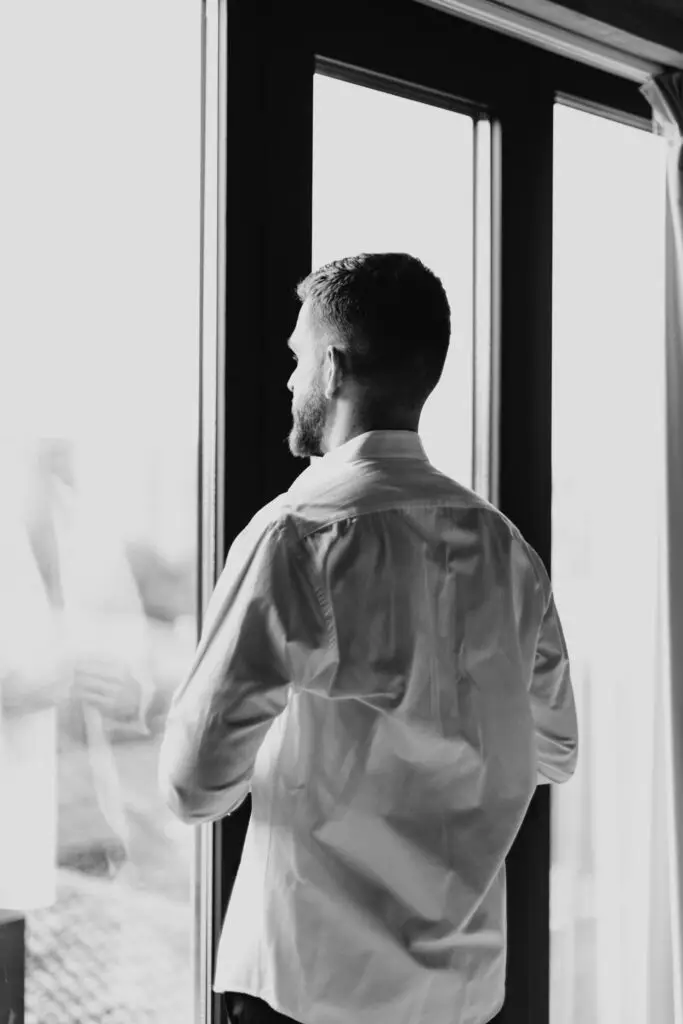
The moments couples remember most rarely happen on command. A father seeing his daughter in her dress, a deep breath before the aisle, friends laughing during a quiet pause between events – these are the moments a thoughtful wedding videography timeline protects. The goal is not to turn your wedding into a production. It is to create enough room for the day to unfold naturally, so your film can preserve how it truly felt.
A well-paced timeline gives your videographer time to capture the visual beauty of the day, but it also protects something more valuable: your presence. When every minute is overbooked, portraits feel rushed, audio becomes harder to manage, and the honest in-between moments disappear. A little intention gives your wedding film the space it needs to breathe.
Start Earlier Than You Think
For most weddings, video coverage works best when the filmmaking team arrives during the final stage of getting ready. This is when the room has energy, meaningful details are in place, and the people closest to you are beginning to feel the weight and excitement of the day.
Plan for your videographer to have about 60 to 90 minutes with each partner’s preparations, depending on whether you are getting ready in the same location. This window allows for more than dress shots and detail footage. It makes room for a parent fastening a cufflink, a handwritten note being read aloud, champagne being poured, or a quiet moment alone before the ceremony begins.
If hair and makeup are already complete before video arrives, that can work beautifully. What matters is that there is still enough time for natural interactions, final touches, and a few calm portraits. You do not need to perform your morning for the camera. Simply leave room to experience it.
Gather Meaningful Details in One Place
Before the day begins, designate a box or bag for items you would like filmed: invitations, rings, vow books, heirlooms, perfume, jewelry, shoes, and any meaningful fabric or memento. Having these details together saves time and lets your videographer begin with purpose rather than searching through multiple rooms.
Details are not just decorative footage. In a finished film, they help establish the atmosphere of your day and connect the larger story to the small choices that made it yours.
Build Your Wedding Videography Timeline Around Light
Light shapes the feeling of a film. It affects skin tones, movement, atmosphere, and the quiet visual texture that makes a wedding day feel cinematic rather than simply documented.
If you are planning an outdoor ceremony or portraits, check sunset time before finalizing your schedule. Ideally, reserve 15 to 25 minutes near golden hour for the two of you. This does not need to be a long or heavily directed session. Often, a brief walk away from the reception, a few minutes under soft evening light, and the chance to be together without an audience can become some of the most intimate footage in your film.
A winter wedding in Upstate New York may require portraits much earlier than a summer celebration, when the light lasts late into the evening. A ballroom wedding may need a different approach than a Catskills estate with open fields and a long sunset. The right timing depends on your venue, season, and the kind of atmosphere you want to remember.
If sunset portraits would pull you away from a reception you care deeply about, there is a trade-off to consider. You can prioritize uninterrupted celebration, or you can step out briefly for the best natural light of the day. Neither choice is wrong. The best decision is the one that feels most like you.
Give the First Look Room to Breathe
A first look can simplify a wedding day, especially when you want most couple and wedding-party portraits completed before the ceremony. It can also create a private, emotional moment that belongs only to the two of you.
Schedule at least 20 minutes for the first look itself, then allow 45 to 60 minutes for couple portraits afterward. Add time for the wedding party and immediate family if those groups will be photographed before the ceremony. This may sound generous, but travel between locations, bustling, fixing boutonnieres, and gathering people always take longer than expected.
If you prefer to wait until the aisle to see each other, build in a different kind of margin. Your post-ceremony portrait period will need more time, and cocktail hour may overlap with photographs. Many couples choose this intentionally because the ceremony reveal matters deeply to them. In that case, consider greeting guests later at the reception or saving a small portion of cocktail hour for yourselves rather than trying to do everything at once.
Protect the Ceremony Audio
The vows, readings, and voices of the people you love are often the emotional foundation of a wedding film. Beautiful images matter, but hearing your partner promise a life with you brings the memory back in a way visuals alone cannot.
Let your videographer know about any readings, live musicians, cultural traditions, or surprise performances before the day. They can prepare the right audio setup and anticipate moments that deserve special attention. It also helps to tell your officiant that a videography team will be recording sound, particularly if they use a microphone or venue sound system.
Ask your planner or coordinator to hold the aisle clear at the start of the ceremony. A few seconds of open space can help capture your entrance without guests stepping into the frame. This is not about limiting your guests’ joy. It is about giving the moment a clean beginning before everyone settles into celebrating with you.
Leave a Buffer Before You Walk Down the Aisle
Aim to be fully dressed and ready at least 15 minutes before the ceremony begins. That small buffer allows for final touch-ups, a bathroom break, a deep breath, and any unexpected adjustment without turning the most meaningful part of your day into a sprint.
Plan the Reception as a Story, Not a Checklist
Reception timelines often become crowded because every tradition is scheduled tightly together. From a filmmaking perspective, that can make the evening feel compressed. It also gives you less time to eat, connect with guests, and enjoy the room you created.
Whenever possible, separate major events with a little space. Allow guests to settle after dinner before toasts begin. Give yourselves a moment after the first dance before parent dances or an open dance floor. Consider whether cake cutting needs to happen immediately, or whether it can wait until the party has built some energy.
A natural reception rhythm might include your entrance, dinner, toasts, first dances, and open dancing, with breathing room between each chapter. The exact order can change. What matters is that your videographer can capture the anticipation before a toast, the reactions during it, and the embrace afterward – not just the person holding the microphone.
If you are planning a private last dance, a sparkler exit, or a late-night outfit change, share it with your filmmaking team well in advance. These moments often become powerful closing images, but they require coordination and realistic timing. Sparkler exits, in particular, can take longer to organize than expected.
A Sample Wedding Videography Timeline
For a ceremony beginning at 5:00 p.m., a balanced schedule might look like this:
- 1:30 p.m.: Videography begins with final preparations and details.
- 3:00 p.m.: First look and couple portraits.
- 4:15 p.m.: Wedding party and immediate family portraits.
- 4:45 p.m.: A quiet reset before the ceremony.
- 5:00 p.m.: Ceremony begins.
- 5:35 p.m.: Congratulations, family photos, and cocktail hour.
- 6:15 p.m.: Brief golden-hour portraits, if the light and season allow.
- 6:45 p.m.: Reception entrance, dinner, toasts, and dances.
This is a starting point, not a rule. A church ceremony, a multi-location wedding, a large family portrait list, or a late sunset will call for adjustments. The best timeline reflects your priorities instead of forcing your day into someone else’s template.
Let the Day Have a Little Imperfection
The most moving wedding films are not built from a perfectly controlled schedule. They are built from real people, real voices, and moments that cannot be repeated. A timeline should create structure, but it should never make you feel like you are rushing from one obligation to the next.
When you plan with room for emotion, movement, and a few unexpected delays, you give yourselves a rare gift: the ability to be fully there. Years from now, your film will not just show what happened. It will bring you back to the laughter, the vows, the music, and the people who surrounded you while your story was becoming a memory.